Choosing the right Stacking Systems can improve warehouse capacity, handling speed, and workplace safety. For global buyers, the decision involves more than comparing prices or product photographs. Warehouse height, pallet dimensions, loading patterns, forklift access, and local operating conditions all influence the final result.
This guide examines ten practical types used across manufacturing, distribution, retail, cold storage, and other demanding environments. The options may include pallet stacking frames, drive-in systems, push-back racks, mobile racks, and automated solutions. Each system offers different benefits, limitations, installation requirements, and maintenance needs. Buyers should review certified load ratings, steel specifications, anchoring methods, corrosion protection, and supplier testing records before approving a purchase. Clear documentation matters.
Small details matter.
In real projects, advertised capacity does not always match daily performance. Uneven floors, damaged pallets, changing product weights, or poorly trained operators can reduce efficiency and increase risk. A system that works well in one warehouse may perform poorly in another. This guide therefore avoids presenting one universal answer. Instead, it connects each system with realistic purchasing questions, operating conditions, and long-term cost considerations. Some comparisons remain difficult because suppliers may use different testing methods or terminology. That uncertainty deserves attention, not concealment. By combining manufacturer evidence, professional installation advice, user experience, and careful site assessment, global buyers can make more reliable decisions and avoid expensive redesigns.
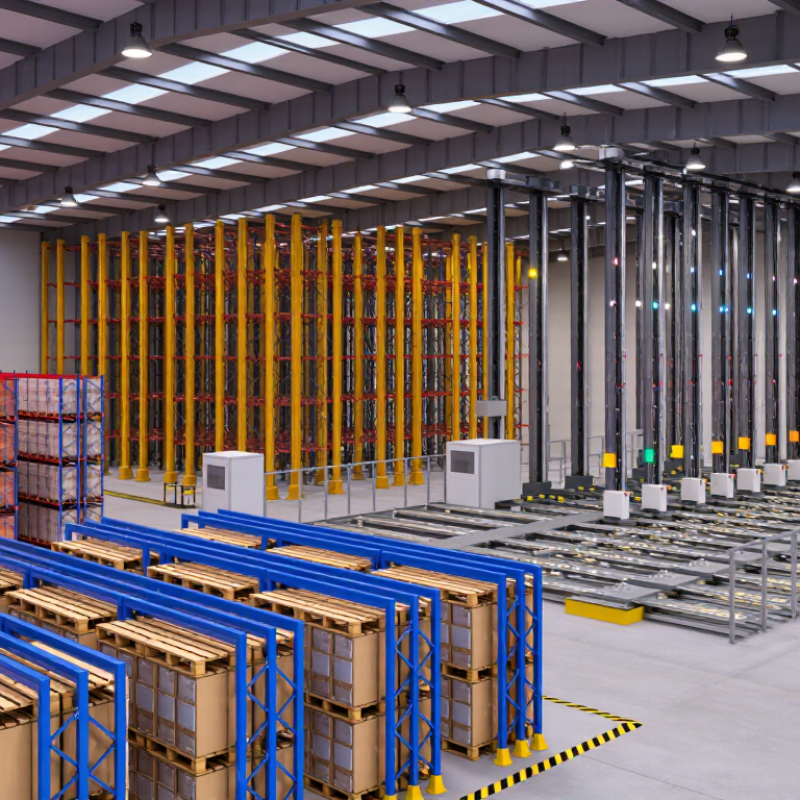
Top 10 Types of Stacking Systems for Global Buyers
A stacking system organizes goods vertically while protecting people, products, and warehouse flow. It may include pallet stacking, block stacking, drive-in racks, push-back racks, flow racks, cantilever racks, mobile racks, and automated storage systems. The correct choice depends on load weight, package shape, turnover rate, ceiling height, and access needs.
The core principle is controlled density, not maximum height. A stable stack keeps its center of gravity aligned and leaves clear inspection paths. It also matches the equipment, pallet dimensions, and floor capacity. MHI’s 2024 Annual Industry Report found that 55% of supply chain leaders increased technology investment during the previous two years. This shows why modern stacking decisions increasingly use sensors, inventory data, and automated controls. Still, technology cannot repair weak product data or poor training. A neat stack can remain inefficient.
Tips: Measure load weight, aisle width, and retrieval frequency before selecting a system. Keep fast-moving goods within easy reach. Check fire clearances and local safety rules. Use written inspection records, even for simple floor stacking. OSHA guidance emphasizes stable storage and unobstructed aisles, while warehouse performance reports commonly track inventory accuracy and picking efficiency. Buyers should compare those measures, not only storage capacity. One overlooked issue is seasonal change. A system designed for today’s volume may become restrictive within months.
Definition and Core Principles of Stacking Systems
The chart compares indicative storage depth per lane, measured in load units such as pallets or cartons. Greater depth generally improves storage density, while single-depth systems provide faster and more direct access. Actual capacity depends on load dimensions, rack height, building structure, fire-code requirements, handling equipment, and required stock rotation method.
Stacking systems differ by load, height, aisle width, and handling frequency. Manual pallet stackers suit small warehouses with limited movement and modest lifting heights. Electric walkie stackers reduce physical strain and support regular pallet transfers. Counterbalance stackers work better where loading docks, mixed floors, and changing routes are common. Reach stackers extend into narrow aisles, but operators need accurate positioning. Straddle stackers handle varied pallet widths and uneven load patterns. They are practical, though not always the fastest choice.
For higher throughput, buyers often consider automated storage and retrieval systems, crane-based systems, shuttle systems, and robotic mobile stackers. Crane systems use vertical space efficiently for uniform pallets. Shuttle systems support dense storage and repeated movements, especially in cold or high-volume facilities. Robotic mobile stackers offer flexible routing, but floor quality and software integration remain critical.
According to World Robotics 2024, 541,302 industrial robots were installed globally in 2023, showing stronger interest in automated material handling. The 2024 MHI Annual Industry Report also identifies robotics and automation as major supply-chain investment priorities.
A reliable selection process should compare load stability, maintenance access, fire protection, operator training, and local service capability. Energy use matters too. A system that looks efficient on paper may perform poorly under irregular workloads. No layout is perfect. Buyers should test real pallets, aisle clearances, peak-hour traffic, and failure scenarios before approving the final design.
Choosing a stacking system depends on pallet weight, product turnover, floor space, and handling equipment. Each design solves a different storage problem.
Block stacking places pallets directly on the floor, making it affordable for stable, low-turnover goods. Single-deep selective racking gives every pallet direct access, so it suits mixed inventory and frequent picking. Double-deep racking stores pallets behind one another, improving density but reducing immediate access. Drive-in racking allows forklifts to enter storage lanes, making it useful for large batches of similar products. Push-back racking uses nested carts, supporting several pallets per lane and faster loading. Pallet-flow racking uses rollers and gravity, helping high-volume goods move in a first-in, first-out sequence.
The remaining systems fit more specific conditions. Cantilever racking supports long materials such as pipes, timber, and panels. Mobile racking moves along floor rails, increasing capacity where land is expensive. Carton-flow shelving uses inclined rollers for hand-picked cartons and small parts. Automated storage and retrieval systems combine software, lifts, and storage structures for controlled, high-density operations. It requires reliable data and disciplined maintenance. Otherwise, automation only hides poor processes.
Tips: Measure clear height, aisle width, load dimensions, and floor strength before choosing. Ask for seismic and fire-safety guidance in the destination market. Test forklift turning space with a loaded pallet, not an empty one. Review stock rotation honestly. A dense system can become inconvenient when access matters more than capacity. Regional codes, labor practices, and future expansion also deserve careful review.
Choosing among pallet, carton flow, cantilever, mobile, drive-in, push-back, shuttle, mezzanine, vertical lift, and automated systems requires more than comparing prices. Global buyers should examine load weight, pallet dimensions, ceiling height, aisle width, and available floor space. Measure twice.
Safety must remain measurable. Ask for rated capacities, guarding details, inspection procedures, and installation records. Local building codes, fire requirements, seismic conditions, and worker access can change the correct design. A system suitable for a dry warehouse may fail in cold storage or humid coastal conditions. Environment matters too.
Operational fit often decides long-term value. Compare selectivity, storage density, picking speed, labor needs, maintenance access, energy use, spare-part availability, and expected service life. A dense drive-in layout may reduce access, while carton flow can improve order picking but require more replenishment control. Automated equipment may save labor, yet it demands reliable software, trained technicians, and stable power. Total cost should include shipping, installation, training, downtime, and future expansion. Cheap is not always economical. A spreadsheet rarely captures every delay. Buyers should request test results, clear warranty terms, and references from similar facilities. Even experienced teams can overlook cleaning access or emergency movement. Leave room for change.
Safety, Installation, Maintenance, and Purchasing Considerations
The ten common options include floor stacking, block stacking, selective pallet racking, double-deep racking, drive-in racking, push-back racking, pallet flow racking, mobile racking, cantilever racking, and automated storage systems. Each suits different loads, aisles, turnover rates, and building heights.
OSHA estimates that powered industrial trucks cause about 85 fatalities and 34,900 serious injuries annually in the United States. Therefore, load capacity, rack protection, pedestrian separation, and operator training deserve early attention. A cheaper system can become expensive after one impact.
Installation should follow approved drawings, floor-load limits, anchoring requirements, and local inspection rules. ANSI/RMI MH16.1 provides structural guidance for industrial steel storage racks. Buyers should request engineering calculations, material certificates, installation records, and a documented handover inspection.
Maintenance needs visible damage checks, bolt inspections, beam-level reviews, and prompt isolation of unsafe bays. The MHI 2024 Annual Industry Report also identifies workforce availability as a continuing supply-chain challenge, so simple inspection procedures matter. Automation reduces some travel, but it does not remove maintenance risk.
Tips: Measure the real pallet, not the catalog pallet. Keep emergency access clear. Ask about spare components and response times. Test one aisle before scaling globally. A perfect layout is rare; I have seen teams overbuy density and lose picking speed. Review the design after three months of actual operation.
It organizes goods vertically while protecting people, products, and warehouse movement. Good stacking controls density rather than chasing maximum height.
Check load weight, package shape, pallet size, ceiling height, aisle width, and turnover speed. Also consider floor capacity and retrieval frequency. The cheapest option may not fit real operations.
It suits stable, uniform loads with limited product variety and regular access. Goods sit directly on the floor or in compact blocks. Inspection paths can disappear quickly.
They provide direct access to many pallet positions. This helps warehouses with varied products and frequent picking. They need proper anchoring, impact protection, and clear aisles.
Automation may suit high volumes, repeated movements, tall buildings, or narrow layouts. It still depends on clean data, reliable software, and level floors. Automation is not magic.
Follow approved drawings, floor-load limits, anchoring requirements, and local inspection rules. Keep pedestrian routes and emergency access unobstructed. Measure the real pallet, not the catalog version.
Inspect beams, bolts, guards, pallets, and visible damage on a written schedule. Isolate unsafe storage bays immediately. A neat appearance can hide a serious weakness.
Test real pallets, aisle clearances, peak-hour traffic, and equipment failure scenarios. Ask about spare parts, training, service response, and energy use. Test one aisle.
Keep fast-moving goods within easy reach and compare picking speed with storage density. Review the layout after three months of actual operation. Some designs look efficient on paper, but feel restrictive daily.
Stacking Systems are organized storage and handling solutions designed to place goods, materials, or equipment in vertical or layered arrangements, helping businesses use space efficiently while maintaining safe access and stable load distribution. This article introduces the main categories, including fixed, mobile, pallet, cantilever, flow-based, and automated configurations, explaining how each system operates and which applications it suits best, from warehouses and manufacturing facilities to retail and distribution environments.
For global buyers, selecting the right Stacking Systems requires careful comparison of load capacity, available space, product dimensions, access frequency, workflow requirements, scalability, and total cost. The article also highlights essential considerations for safety, professional installation, routine inspection, maintenance, operator training, and compliance with applicable local standards. By evaluating performance, durability, adaptability, and after-sales support requirements, buyers can choose a practical solution that improves organization, productivity, and long-term operational efficiency.

Lijin Racking