Warehouse space is expensive, yet many facilities still leave usable floor area trapped in wide travel aisles. Narrow Aisle Storage addresses this problem by reducing aisle width and placing pallet racks closer together. The result can be more storage positions within the same building footprint. Space is only part.
MHI’s 2024 Annual Industry Report, produced with Deloitte, reports that 55% of surveyed organizations are increasing supply-chain technology and innovation investments. This reflects growing attention to operational efficiency, though it does not prove that every warehouse needs narrower aisles. The right design depends on inventory, equipment, building constraints, and the speed of daily picking.
In a typical narrow-aisle layout, racks hold palletized goods while reach trucks or specialized turret trucks move through tighter aisles. Some systems use guided vehicles or rails to support accurate travel. Compared with standard counterbalance forklifts, these options may require different training, charging arrangements, and maintenance planning. Trade-offs remain. Tighter aisles can improve storage density, but they may affect travel time, maneuverability, and access during busy shifts. A layout that looks efficient on a drawing can feel different when operators handle real loads.
This guide explains how Narrow Aisle Storage works, which equipment supports it, and what to assess before implementation. It also considers practical limits, including pallet dimensions, floor conditions, and future growth. The goal is not maximum rack density at any cost. It is a safe, workable balance between capacity and movement.
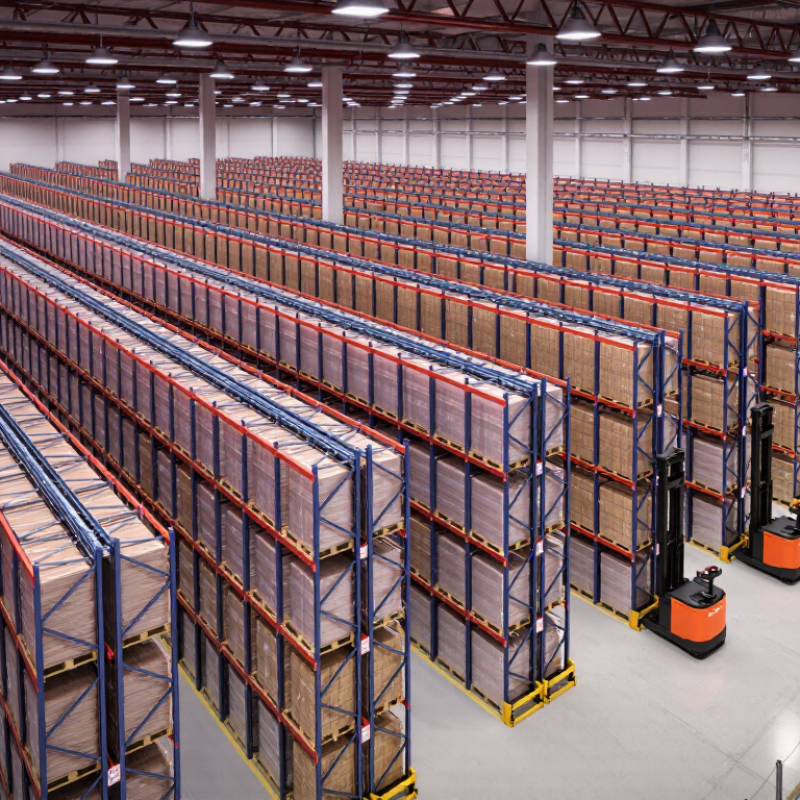
In warehouse design, narrow aisle storage means reducing the space between rack rows to create more pallet positions within the same building. Aisle width depends on the truck, pallet size, load stability, and required clearance. A few inches matter. Designers also map columns, dock routes, and turning points before setting rack locations. The goal is not simply to fit more steel; operators still need room to retrieve loads safely and predictably.
In daily use, specialized reach or turret trucks travel through tighter lanes and lift pallets to assigned rack locations. A driver may move down a long aisle, stop at a marked bay, and raise a load several levels. This works best when rack beams, floor condition, and truck capabilities are checked together. Narrower aisles can increase storage density, but they may also slow cross-aisle movement or create queues near busy pick faces. That trade-off is easy to underestimate. A layout that looks efficient on a drawing may feel restrictive during a shift. Order profiles, replenishment frequency, and pedestrian routes should shape the final aisle plan, not just a target for pallet count.
Narrow aisle storage works by placing rack rows closer together, leaving less floor space for forklift travel and more room for stored goods. The layout creates long, straight lanes between rack faces. Their width depends on the truck’s turning radius, load size, lift height, and required operating clearance. There is no single aisle measurement that suits every warehouse.
The details matter. A pallet that overhangs its rack can reduce clearance, while a poorly positioned upright can make a tight turn difficult. Narrow-aisle trucks, such as reach or turret trucks, are designed to handle these lanes, but the rack plan must match their operating needs. Measure actual loads and turning paths before setting row spacing. Check sightlines, end-of-aisle space, pedestrian routes, and access for maintenance and emergency response, too.
A drawing may look efficient. A busy shift can feel different. Test the proposed layout with operators and representative loads before committing. I have seen small clearance assumptions become daily slowdowns; that is easy to underestimate. Narrower lanes can increase storage density, but they may also limit flexibility when inventory changes or equipment needs servicing. Good rack layout balances capacity with safe, workable movement.
Which Equipment Serves Narrow Aisle Racking
Narrow-aisle racking is commonly served by reach trucks, articulated forklifts, and very-narrow-aisle (VNA) turret trucks. Reach trucks suit selective racks where loads need to move vertically and extend into bays. Articulated trucks can travel between narrower aisles and handle pallets without transferring to a separate aisle. Turret trucks rotate their forks to reach either side of an aisle. Some facilities add rail or wire guidance to help control travel.
MHI and Deloitte’s 2024 Annual Industry Report found that 43% of surveyed supply-chain professionals were using robotics and automation. That figure reflects wider interest in automation, not a guarantee that automated equipment fits every warehouse. Fit matters more. Before choosing a truck, measure clear aisle width, rack height, pallet depth, and load weight. Check mast clearance beneath sprinklers and lights, too.
A truck’s rated capacity can fall as its lift height and load center increase. Verify capacity against the actual pallet, not just its label. Floor condition matters; uneven joints can affect stability and guided travel. A neat layout drawing can miss those details. Operators also need clear sightlines, safe turning zones, and suitable training. The right truck is the one that clears the rack with the real load, on the real floor.
In a narrow aisle system, a pallet usually travels from receiving to a designated rack location on a lift truck designed for reduced aisle clearance. The driver aligns the forks with the pallet openings, raises the load, and places it on the rack beams. For retrieval, the truck enters the aisle, lifts the pallet, and backs out before turning into a cross-aisle. Small movements matter: a skewed pallet or a protruding load can obstruct the next move.
Some facilities use guided trucks or reach trucks to position pallets more precisely. The exact sequence depends on rack depth, truck type, and whether operators can turn within the aisle. OSHA reports that powered industrial trucks are associated with about 85 fatalities and 34,900 serious injuries each year in the United States. That figure covers many work settings, not narrow-aisle operations alone, but it underlines why clear sightlines, trained operators, and controlled travel speeds matter. Slow down. A tight aisle can improve storage density, yet it leaves less room to correct a poor approach. Operators should check pallet condition and load stability before lifting; in practice, damaged pallets still get missed sometimes.
Narrow-aisle performance depends on more than rack density. It is shaped by truck turning clearance, pallet size, floor condition, and traffic rules. A load overhanging by a few centimeters can put a rack upright at risk. A rough floor joint can slow travel. Small details matter. Teams should test actual loaded trucks, not rely only on aisle drawings. OSHA estimates that powered industrial truck incidents cause about 85 deaths and 34,900 serious injuries each year in the United States. These figures are not specific to narrow aisles, but they highlight why visibility, speed control, and pedestrian separation belong in capacity planning.
Throughput also depends on replenishment timing and slotting. If reserve pallets arrive during peak picking hours, congestion can erase the space savings. Clear one-way routes help, but only when workers can follow them consistently. MHI’s 2024 Annual Industry Report found that 55% of surveyed supply-chain leaders planned to increase technology investment. Warehouse systems can support better task sequencing, though software cannot fix poor aisle discipline. A neat slotting plan can still fail when fast-moving items sit behind slow movers. That is an easy mistake to make. Track travel time, blocked aisles, and near misses, then adjust layouts using observed conditions rather than assumptions.
Narrow-aisle storage uses specialized lift trucks and tighter aisles to fit more pallet locations into a given floor area. Aisle width depends on truck type; actual throughput and storage capacity also depend on load dimensions, rack layout, SKU slotting, travel distance, and operator workflow.
Typical planning ranges in feet; requirements vary by truck model, load, and facility conditions.
Tighter aisles can increase potential storage density, but only when the selected truck can safely handle the loads and turning requirements. Confirm aisle specifications with the equipment supplier and facility layout.
It places rack rows closer together, creating long, straight travel lanes. More floor space becomes available for stored goods.
No. The required width depends on truck turning radius, load size, lift height, and operating clearance.
Pallet overhangs, misplaced rack uprights, and unstable loads can narrow the usable path. Small errors matter.
Measure actual pallets, turning paths, and truck movements. Do not rely only on a drawing.
Use representative loads and real operators. Check sightlines, end space, pedestrian routes, maintenance access, and emergency movement.
The truck aligns its forks with the pallet openings, lifts the load, and places it onto the rack beams.
The truck enters the aisle, raises the pallet, and backs out before turning into a cross-aisle.
A skewed pallet or protruding load can block the next movement. There is little room to correct a poor approach.
Yes. They can increase storage density but reduce flexibility when inventory changes or equipment needs servicing.
Operators should check pallet condition, load stability, visibility, and travel speed before lifting. Slow down. Small clearance assumptions can become daily delays.
Narrow Aisle Storage is a warehouse design approach that increases storage density by reducing the space between rack rows. A carefully planned layout creates compact travel lanes while preserving access to pallet locations. The result can be more usable storage within the same floor area, provided the aisle widths, rack configuration, and handling equipment are matched to the building and the operation’s needs.
Specialized equipment suited to narrow lanes moves pallets into and out of rack positions, while a clear movement process helps keep goods flowing safely and efficiently. Performance depends on factors such as aisle dimensions, pallet size and condition, operator training, traffic patterns, and the speed at which inventory must be accessed. Good planning balances storage capacity with maneuverability and access, so the system supports daily work without creating unnecessary delays or congestion.

Lijin Racking